


Gracias a la Nueva Canción
- Jan 22, 2018
- 4 min read
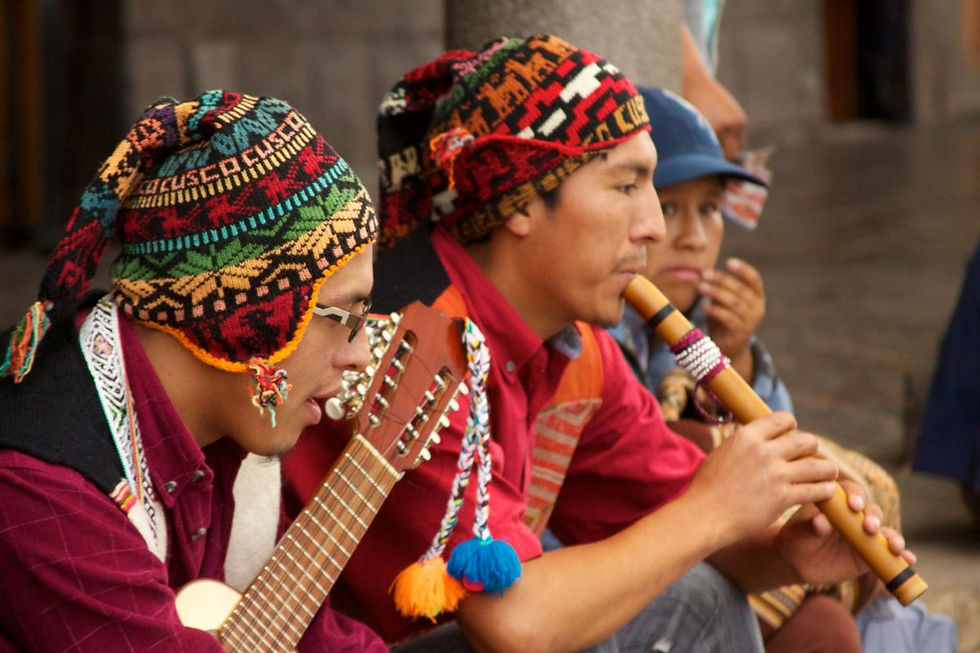
What do a Ukranian revolution, the rise of left-wing militant politics in Latin America, and the strength of African culture in Bolivia have in common? Interestingly enough, Andean music.
For a people conquered almost 500 years ago by the Spanish, the indigenous people of Latin America stand strong. They hold onto their languages (such as Quechua), folk traditions, and music in the modern era. Even the Andeans, once conquered and assimilated by the Inca Empire long before the arrival of the Spanish, have found a way to hold onto their traditions after centuries passed, ever present in the lifestyle of Bolivians and other Latin Americans. Power has passed through many hands in an attempt to control the South American region, from the Inca to the Spanish to right-wing militants to left-wing dictators, and yet, despite consistently being a conquered people, the Andeans have maintained their own dominance through their culture. In particular, they have carried their traditions through their music.
One relatively less known, yet very prominent, example of the persistence and power of Andean music is Saya. It is a music and dance form founded in Bolivia by those of African descent. African and native cultures merged to create life through art and even though the original cultural traditions of those slaves brought to the New World from their homes have been lost, the cultural survivors still exist today. Most importantly, Afro-Bolivians have used Saya to reclaim their rights in Bolivian society, voicing their struggles in art form and using performance as a method to express their identity.
However, the most famous modernization of Andean music is Nueva Canción which renews traditional folk music with powerful political messages, playing a profound role in global social revolutions in nations such as in Spain, Argentina, and Ukraine in the 1970s and 1980s. It’s performers often associated themselves with the New Left and human rights movements, using art to improve the social good. Thus, they not only used the traditional musical instruments and styles, but also the ideology and basis of Andean music and art as a way to benefit the community and celebrate their identity.
The music movement centered primarily around Chile to protest the poverty, socioeconomic inequality, and political climate of the nation. In particular, many musicians took a leftist stance in their music and opposed United States interference in their government, such as when the U.S. pushed the right-wing dictator, General Augusto Pinochet, into power. The military general violently persecuted, tortured, and killed tens of thousands of people, including the Chilean Nueva Canción musician and activist, Víctor Jara, and Bolivian photographer, Rodrigo Rojas DeNegri, to shut up leftist advocates and the exposure of the countless human rights violations.
That was just one of many examples of when the Nueva Canción artists were persecuted for expressing their beliefs, but it didn’t stop them from using their popularity and talent to fight for what they believed in. Mercedes Sosa, for example, persisted in using her music to help the average people of Argentina, in particular the women (such as in her song, “Mujeres Argentinas”). She was persecuted by the rightist Videla government for supporting Juan Perón, but nevertheless spent her life supporting leftist causes around the world. Atahualpa Yupanqui, another Argentinian left-leaning Nueva Canción artist, produced much ethnographic work and championed for the Argentinian common man.
Albeit, not everyone had a political axe to grind. Some, like Violeta Parra, preferred to connect to their indigenous ancestry through their music. Then again, while she did not create her music for advocacy, many used her work to further their own goals due to the powerful messages within the music. Ukraine’s protestors, for example, drew upon Violeta Parra’s “Gracias a la Vida” in the Orange Revolution to call out the election fraud in 2004’s presidential race. Michael Bublé, via the same song, fundraised money to rebuild Chile after the devastating earthquake.
Nueva Canción took on a multitude of styles, messages, and identities, but it tended to link back to Latin American folklore and the Andean music style. This, like many other music forms descended from the Andean tradition, adapted to the times and gave the indigenous peoples of Latin America a voice. It goes to show that even when a people fall under the control of numerous oppressing entities, even when they are exploited and suppressed, they live strong. The Andean tradition has not only survived, but has evolved to its peoples needs in the modern world.
Works Cited
Admin. “The Music of Chile.” Chileno, Newspaper
Wordpress, 21 July 2013, chileno.co.uk/chile/the-music-of-chile/.
C, Jude. “Discover the Traditional Music of
Peru.” The Karikuy Blog, The Karikuy House, 26
Sept. 2016,
www.karikuy.org/blog/2016/09/26/discover-the-traditional-music-of-peru/.
“Gracias a La Vida.” Wikipedia, Wikimedia
Foundation, 9 Jan. 2018,
en.wikipedia.org/wiki/Gracias_a_la_Vida.
“Nueva Cancion.” Revolvy
www.revolvy.com/topic/Nueva%20Cancion&item_type=topic.
“Rodrigo Rojas DeNegri Biography.” Revolvy,
www.revolvy.com/main/index.php?s=Rodrigo%2BRojas%2BDeNegri.
Rohter, Larry. “Mercedes Sosa, Who Sang of
Argentina's Turmoil, Dies at 74.” The New York
Times, The New York Times, 4 Oct. 2009, www.nytimes.com/2009/10/05/arts/music/05sosa.html.
“Saya, Afro-Aymara Dances.” Danzas Bolivianas /
Bolivian Dance, Blogspot, 2015,
boliviandances.blogspot.com/2015/03/saya-afro-aymara-dance-dance-saya-is.html.
“Saya (Bolivia).” All Around This World, Online
Education for Kids,
www.allaroundthisworld.com/learn/latin-america/kinds-of-latin-music/saya-bolivia/#.WmZdWpM-eT8.
“Victor Jara Biography.” Encyclopedia of World
Biography, Advameg Inc., 2008,
www.notablebiographies.com/supp/Supplement-Fl-Ka/Jara-Victor.html.
“Violeta Parra Biography.” Revolvy,
www.revolvy.com/main/index.php?s=Violeta%2BParra&item_type=topic.
Credits to Youtube for videos
Comments